Demand forecasting has always been one of those functions that businesses know matters but historically got wrong just enough to cause real problems.
For decades, the standard toolkit was spreadsheets and statistical models like ARIMA that leaned almost entirely on historical sales data. That worked reasonably well in stable markets. But supply chains today are not stable.
Post-pandemic demand swings, raw material shortages, geopolitical disruptions, and the sheer speed of e-commerce have exposed how brittle those legacy approaches really are. Traditional methods are static, slow, and black swan events like pandemics can render historical datasets nearly useless overnight.
AI development services change the equation in a meaningful way. According to McKinsey, applying AI-driven forecasting can reduce forecast errors by 20 to 50%, translating into up to a 65% reduction in lost sales and product unavailability, 5 to 10% lower warehousing costs, and a 25 to 40% improvement in administration costs.
According to Gartner, 70% of large organizations are expected to adopt AI-based supply chain forecasting to predict future demand by 2030.
This guide covers the top 5 AI demand forecasting tools worth considering across retail, manufacturing, and e-commerce with a practical lens. And if you’re a business whose needs go beyond what a standard platform can handle, we cover that too.
Table of Contents
What is AI Demand Forecasting?
AI demand forecasting is the use of artificial intelligence to estimate future demand for products or services. It works by analyzing real-time and historical data, along with relevant external factors, to produce predictions and actionable insights that help organizations make better decisions about inventory, production, pricing, and supply chain planning.
Three things in particular separate AI forecasting from traditional methods:
It works without full historical data.
For new products that lack historical data, machine learning solutions can identify clusters of prior products with similar characteristics and lifecycle curves, then use those datasets as a substitute to make predictions. That matters a lot when you are trying to forecast demand for a new SKU with nothing to go on.
It improves over time.
Unlike static statistical models, AI-driven forecasting systems learn dynamically. Machine learning algorithms identify relationships within data that are too complex or nonlinear for traditional forecasting methods to capture.
It is significantly faster.
Idaho Forest Group used AI-powered forecasting to reduce forecasting time from more than 80 hours to under 15. That kind of speed difference changes how quickly planning teams can respond to real-world changes.
Top 5 AI Demand Forecasting Tools
There is no single best tool here. The right one depends on your industry, your data complexity, your team’s technical depth, and your budget.
| Tool | Best For | AI Method |
| Blue Yonder | Large retail, omnichannel, high SKU complexity | Probabilistic ML, attribute-based modeling, agentic AI |
| o9 Solutions | Integrated enterprise planning across demand, supply, and finance | Gradient-boosted trees, deep learning, model ensembles |
| RELEX Solutions | Retail and grocery with complex demand drivers | Probabilistic AI, promotion and weather modeling |
| Anaplan | Finance-led demand planning, connected business planning | 26-model statistical engine, AI agent for disruption alerts |
| Kinaxis | Multi-tier supply chain with concurrent planning needs | Real-time scenario modeling, concurrent planning AI |
-
Blue Yonder
If you are running a large retail or omnichannel operation with high SKU complexity, Blue Yonder is the most complete platform on the market.
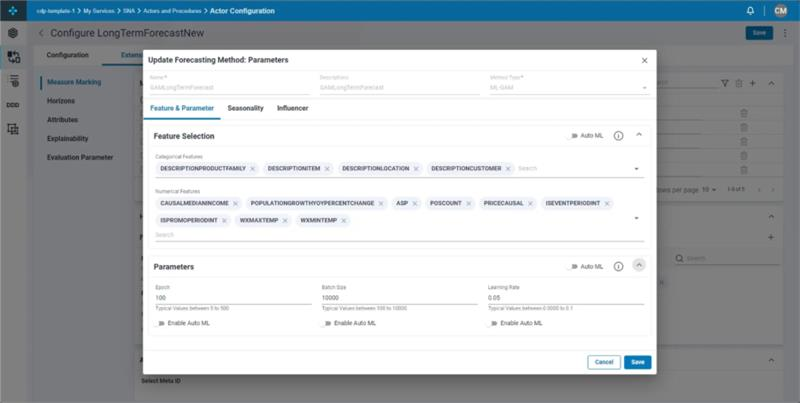
Image Source: BlueYonder
The accuracy numbers are meaningful. Blue Yonder’s Cognitive Demand Planning can improve forecast accuracy by up to 12% through patented algorithms and machine learning models, improve planner efficiency by 75%, and reduce costs by 50%. Real-world results back this up too: DHL saved 7% on transportation costs using Blue Yonder’s network design tools.
Best for: Retail, omnichannel, consumer goods, high-volume e-commerce
Pricing: Custom pricing based on features, user licenses, and deployment model.
Website: https://blueyonder.com/
Pros:
- Named a Leader in the Gartner Magic Quadrant for Supply Chain Planning Solutions for the 12th consecutive time
- Strong scenario planning and what-if analysis at scale
Cons:
- Implementation time is lengthy and requires constant support; 80% of users report limited customization options
- Heavy investment required. Not suited for mid-market or growing businesses
-
o9 Solutions
o9 takes a different approach to forecasting. Rather than being a standalone demand tool, it positions itself as a connected planning brain across demand, supply, finance, and operations.
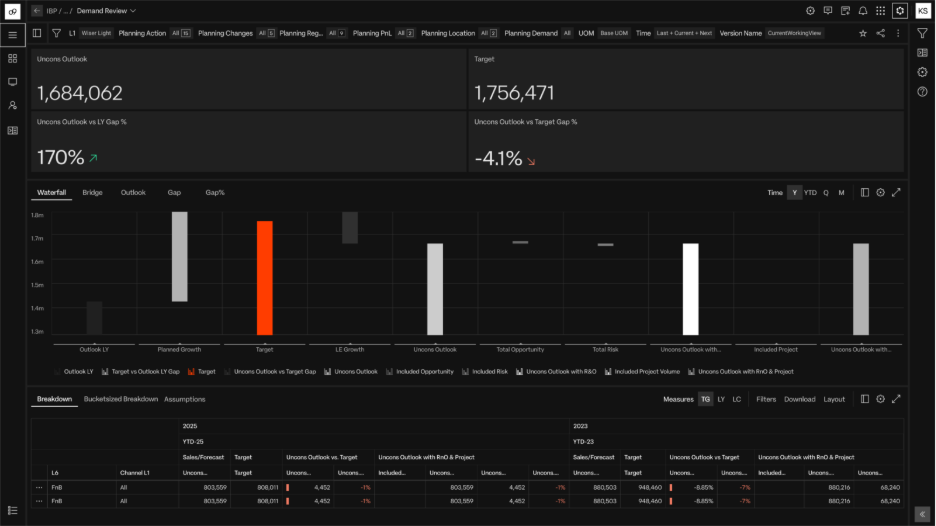
Image Source: o9solutions
The results from enterprise deployments are notable. For Kraft Heinz, managing 7,000 SKUs across multiple regions, o9 delivered an 11% increase in monthly forecast accuracy, a 14% increase in weekly forecast accuracy, a 20% reduction in safety stock levels, and a 32% reduction in time spent on forecasting.
Best for: Large enterprises, consumer goods, manufacturing, businesses that need demand and supply planning on a single platform
Pricing: Custom enterprise pricing. Quote-based only.
Website: https://o9solutions.com/
Pros:
- Named the only Customers’ Choice vendor in the 2025 Gartner Peer Insights for Supply Chain Planning Solutions, the only provider to meet or exceed market average scores for both Overall Experience and User Interest
- Strong cross-functional planning beyond just demand forecasting
Cons:
- High customization flexibility creates development complexity and can delay implementation; some staple forecasting capabilities are not available out of the box
- Not built for small or mid-size businesses
-
RELEX Solutions
RELEX has carved out a strong position in retail, grocery, and CPG by going deep on the forecasting variables that matter most in those verticals: promotions, weather, seasonality, spoilage, and store-level granularity.
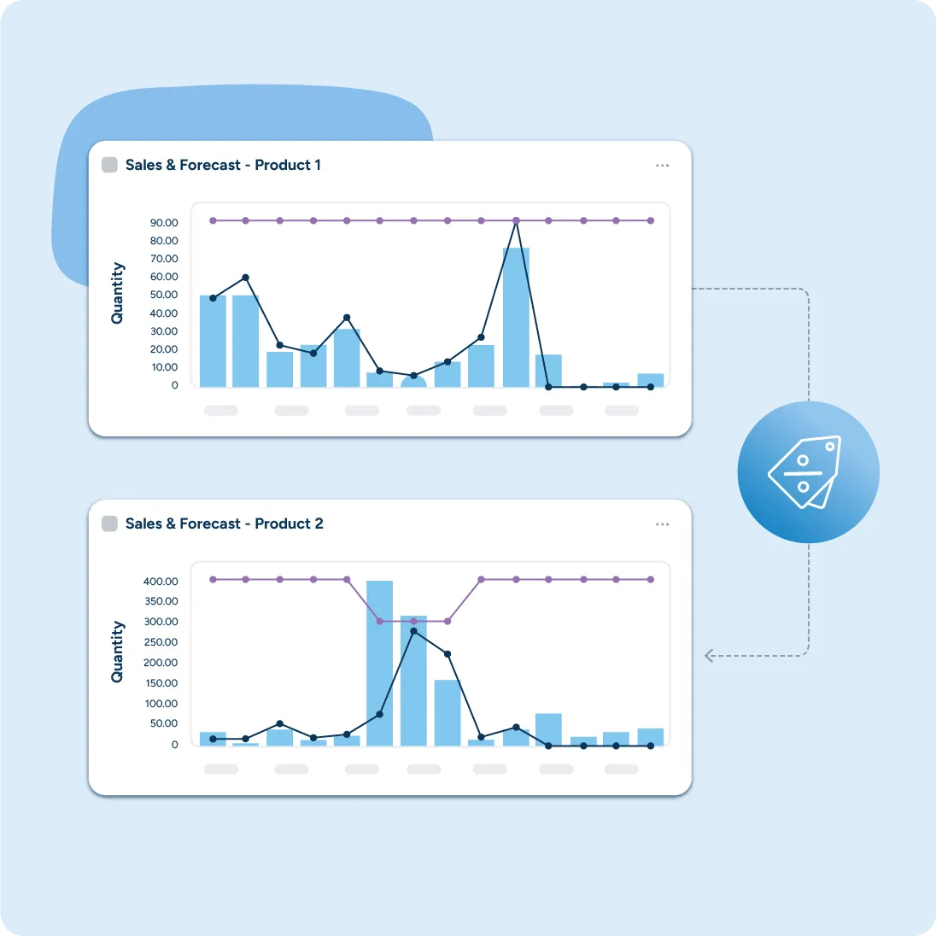
Image Source: Relex
The platform uses probabilistic AI-based modeling to account for uncertainty in supply and demand, turning that uncertainty into automated, transparent actions.
RELEX also reported 30% year-over-year growth in subscription revenue in the first half of 2025, which signals real customer retention and not just new logo growth.
Best for: Retail, grocery, CPG, fresh and perishable goods, wholesalers
Pricing: Custom pricing. Implementation typically takes 6 to 12 months.
Website: https://www.relexsolutions.com/
Pros:
- Recognized as a Leader in the 2025 Gartner Magic Quadrant for Supply Chain Planning Solutions
- No-code configuration reduces IT dependency for ongoing changes
Cons:
- Primarily built for retail and CPG; less suited to complex manufacturing use cases
- Longer implementation timelines compared to lighter-weight tools
-
Anaplan
Anaplan sits at the intersection of financial planning and supply chain planning. It is not a pure-play demand forecasting tool, but for organizations where finance, sales, and supply chain need to plan from a single connected model, it is hard to beat.
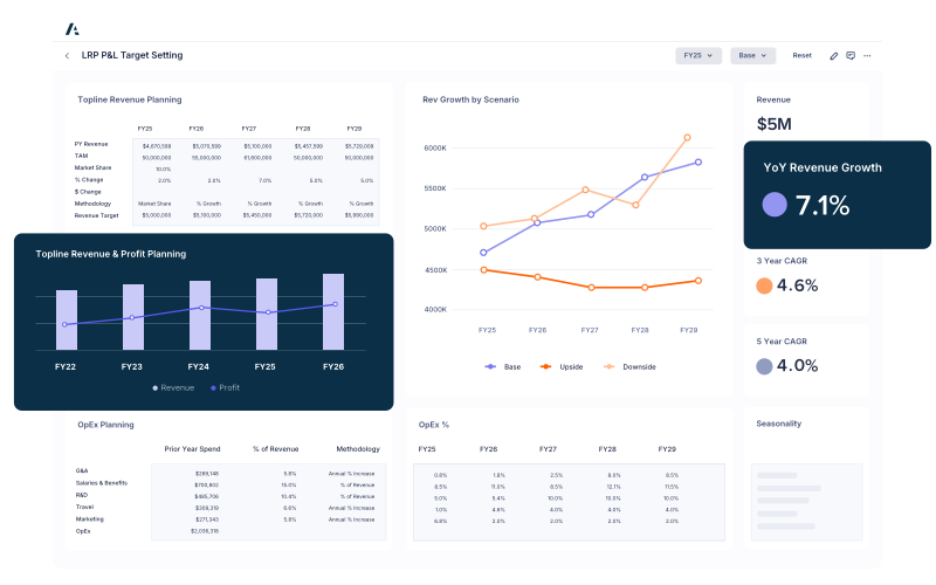
Image Source: Anaplan
The platform automatically analyzes sales history to determine which of 26 statistical time series forecasting models is the best fit for each item, removing a lot of the manual model selection work that slows planning teams down.
Best for: Mid to large enterprises, consumer goods, retail, businesses that need finance and supply chain on one platform
Pricing: Quote-based.
Website: https://www.anaplan.com/
Pros:
- Strong scenario modeling and what-if analysis across demand, supply, and finance together
- Pre-built connectors and APIs for seamless integration with ERP and CRM systems
Cons:
- Steep learning curve; getting the most out of the platform requires Anaplan modeling skills and a structured implementation approach, which can slow early deployments
- Not purpose-built for supply chain forecasting; requires more configuration than out-of-the-box demand suites
-
Kinaxis
Kinaxis RapidResponse is the go-to for businesses running complex, multi-tier supply chains where demand and supply need to be simultaneously visible and adjustable in real time.
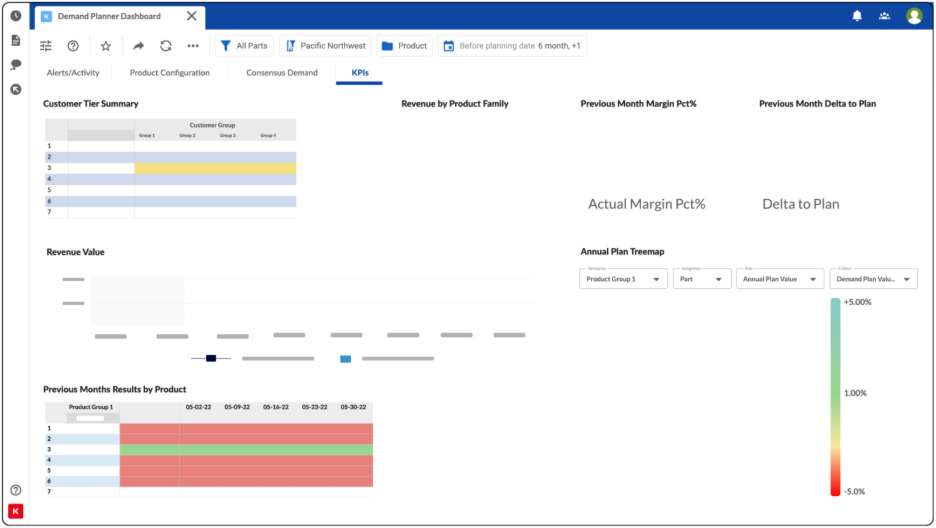
Image taken from the official website
It fuses historical data, functional forecasts, and external signals into a single, continuously synchronized plan. Its scenario modeling tests demand, supply, and capacity trade-offs in minutes.
Best for: Automotive, aerospace, high-tech manufacturing, pharmaceutical supply chains
Pricing: Enterprise custom pricing only.
Website: https://www.kinaxis.com/en
Pros:
- Real-time concurrent planning across demand, supply, inventory, and capacity
- Handles multi-tier BOM complexity better than most platforms
Cons:
- Built for large enterprise; cost and complexity rule it out for most mid-market businesses
- Implementation requires significant time and resources
How We Evaluated These AI Demand Forecasting Tools
There is no shortage of vendors claiming their platform is “AI-powered.” The term has been stretched so far that it now covers everything from basic regression models to genuine machine learning systems that retrain on live data. So before getting into the tool reviews, here is what we actually looked at.
-
Forecast accuracy
This is the only metric that ultimately matters. Only about 7% of companies achieve forecast accuracy above 90% using traditional methods, with most organizations hovering between 70 and 79%. We prioritized tools with documented accuracy benchmarks.
-
Integration depth
A forecasting tool that sits in isolation is only half useful. The real value comes from end-to-end visibility. We looked at how well each platform connects to ERP, WMS, TMS, and common e-commerce and retail data sources.
-
Transparency into how forecasts are made
Look for tools that provide insights into how forecasts are generated. The software should be able to show you why the model made a particular prediction and the underlying data used. Tools that give you a number with no explanation behind it are harder to trust and harder to act on.
-
Customizability and human override
The best platforms offer a balance of automation and human control, empowering your planners rather than replacing them. We favored tools that let teams adjust parameters, apply business rules, and override when the model gets it wrong.
-
Industry fit
Retail, manufacturing, and e-commerce have genuinely different forecasting challenges. A tool built for consumer packaged goods does not automatically work well for contract manufacturing or marketplace e-commerce. We evaluated each platform against the specific demands of each vertical.
-
Implementation time and total cost
Many solutions have very long implementation times. We factored in how fast a team can realistically get up and running, not just the license cost.
When Off-the-Shelf AI Demand Forecasting Tools Are Not Enough
The tools reviewed above are genuinely good. Blue Yonder, o9, RELEX, and Kinaxis have earned their market positions and they deliver real results for the businesses they were designed for. This section is not about undermining them.
Off-the-shelf AI demand forecasting solutions can be a great starting point. But they may fail to meet specific needs and seamlessly integrate with existing systems. That limitation shows up in predictable ways.
Your data does not look like anyone else’s.
Every platform you evaluated was trained on generalized datasets and built around assumptions about how a typical manufacturing or e-commerce business operates.
If your business has proprietary demand signals, unique seasonality patterns, or operational variables that no platform has ever seen, a generic model will never fully capture them.
Integration with legacy infrastructure is harder than vendors admit.
AI models generally perform better within modern cloud environments, but integration can be a serious concern for businesses that have existing legacy frameworks. Some tools are not even compatible with each other.
Buying a best-in-class forecasting platform and then spending 18 months trying to connect it to your ERP is a scoping problem that custom-built solutions avoid from day one.
The ROI case for going custom is well documented.
Walmart’s custom AI demand forecasting system combined data from point-of-sale transactions, weather patterns, economic trends, and social media sentiment. It delivered a 30% improvement in forecast accuracy, generating annual ROI exceeding $1 billion.
An MIT analysis found that despite $30 to 40 billion in enterprise AI investment, 95% of organizations report no measurable financial return. That gap is exactly where custom solutions are built to operate.
Is a Custom AI Demand Forecasting Solution Right for You?
Not every business needs a custom-built forecasting solution. The platforms reviewed in this article handle standard forecasting challenges well, and for many businesses they are the right choice.
If two or more of the following apply to your situation, a custom solution is worth a serious conversation.
-
Off-the-shelf tools have already missed on accuracy
You ran a pilot or deployed a platform and forecast accuracy on your actual SKU mix never hit the numbers the vendor promised. Companies using AI forecasting report 92% forecast accuracy on average, compared to 65% with traditional methods.
If you are running a commercial platform and still sitting at 65 to 70%, the tool is not the right fit for your data. A model built around your specific demand patterns will consistently outperform a generalist one.
-
Your data does not fit a standard template
You have demand signals no vendor dataset includes: proprietary customer behavior data, unique supplier feeds, or operational variables specific to your production environment.
Organizations achieving the highest ROI from AI forecasting invested 31% of their implementation budget in data preparation and system integration, not algorithm development. That investment pays off when the model is built around your data from day one.
-
Your supply chain has layers that most tools cannot see
Multi-tier manufacturing, contract production, long and variable lead times, BOM-level demand dependencies. These are not edge cases.
They are core to how many industrial, automotive, and specialty manufacturing businesses operate. Most SaaS forecasting platforms were not built to model them properly.
-
You operate in a regulated industry
Pharmaceutical, medical devices, food and beverage, and defense. In these environments, you need full ownership of your data pipelines, explainability in model outputs, and audit trails. Most SaaS platforms cannot provide all three at the level of compliance required.
-
You want a forecasting asset
A custom model becomes proprietary intellectual property over time. Competitors can license the same SaaS platform you use. They cannot replicate a model trained on your data, built around your operations, and refined as your business evolves.
Conclusion
The AI demand forecasting market has matured quickly. Two years ago, most of these platforms were still in the early adopter phase.
Today they are production systems running at scale inside some of the world’s largest retailers, manufacturers, and e-commerce operations.
The tools covered in this article represent the strongest options available right now. But the honest reality is that standard platforms were designed for standard businesses.
In 2026, AI accountability and ROI will take center stage, with tighter budgets pushing organizations toward measurable outcomes and away from tools that fail to prove financial impact.
Businesses that move now with custom AI solutions, whether with a commercial platform or a custom-built solution, will have a meaningful head start on those that are still evaluating in 2027.
If you are in retail, manufacturing, or e-commerce and your current forecasting approach is not delivering the accuracy or operational clarity you need, we are happy to take a look.
Our free forecasting audit is a straight conversation about where you stand, what is causing the gaps, and what a more accurate approach would realistically look like for your business.
[Book a free forecasting audit for your business]
Frequently Asked Questions
What is the best AI demand forecasting tool?
There is no single best tool across the board. Blue Yonder and RELEX Solutions lead for retail and grocery. o9 Solutions and Kinaxis are the strongest options for complex enterprise and manufacturing supply chains. Anaplan works well when demand planning needs to connect directly with financial planning. The right choice depends on your industry, data complexity, and how much customization you need.
Can small and mid-size businesses use AI demand forecasting?
Yes, though the right entry point matters. Enterprise platforms like Blue Yonder or Kinaxis are built for large organizations and priced accordingly. For smaller businesses, cloud-based tools lower costs and make scaling easier. Starting with a pilot project in one part of the business is a practical way to demonstrate value before committing to a full deployment.
How does AI demand forecasting integrate with ERP systems?
Most enterprise forecasting platforms offer pre-built connectors for SAP, Oracle, Microsoft Dynamics, and other common ERP systems. Cloud-based systems built to work together make it easier for demand planners who need quick access to data from every part of the company. Integration complexity depends on how modern your existing infrastructure is. Legacy ERP environments require more custom work to connect cleanly, which is one of the practical arguments for building a custom forecasting solution if your stack is non-standard.
How long does it take to build a custom AI demand forecasting solution?
It depends on data readiness, integration complexity, and the scope of the model. A focused solution covering one product category or one region can be operational in 8 to 12 weeks. A full enterprise deployment covering multiple categories, channels, and geographies typically takes 4 to 6 months. The biggest variable is data preparation.