
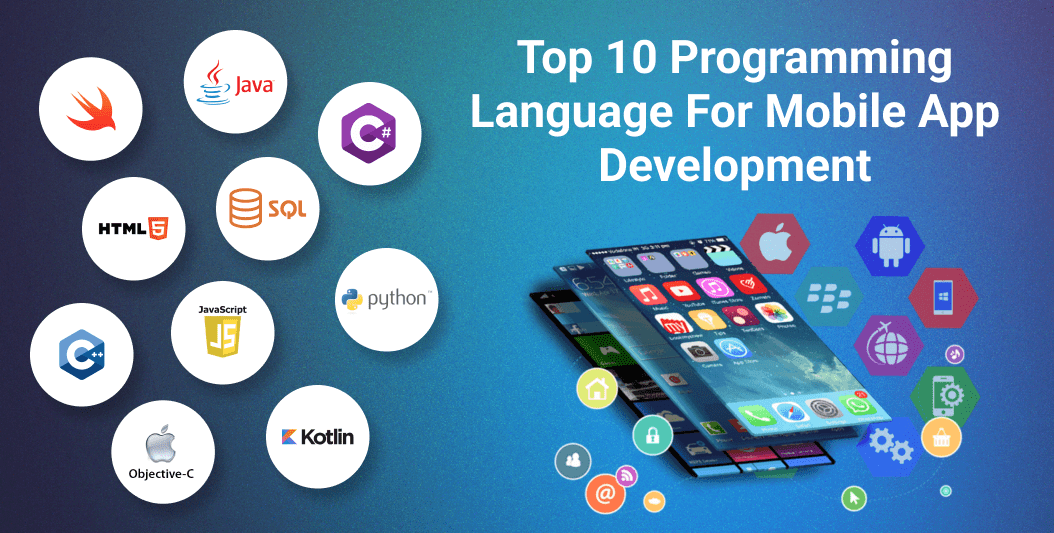
When you think of developing mobile apps in 2026, the first thing that come across your mind or the decision you need to take is not the features or design, but rather it is the programming language you are going to pick. Why? Because that will decide your final look and feel, overall performance, scalability, and cost of that app.
Let’s look at why this tech stack matters:
Just think that the app you are creating is your house. The interior design of the app is important, but if the foundation of the house is not solid, problems will show up really fast. And later, once it is built fully, it will not give you time to rectify the issues.
- If you pick up the wrong programming language, you will face higher maintenance costs.
- Are you trying to focus only on speed? In this case, you might lose long-term scalability.
- Ignorant of platform requirements? Your application can run poorly on Android or iOS.
What do the stats say about programming languages for mobile apps?
Let’s take a look at the overall statistics of the current use of programming languages for mobile apps worldwide.
According to a recent report by Research and Markets, the programming language market size has rapidly grown in recent years. It will grow eventually from $181.15 billion in 2024 to $201.19 billion in 2025 at a compound annual growth rate (CAGR) of 11.1%.
Top 10 Programming Languages for Mobile App Development in 2026
One of the most powerful decisions that your mobile app will have in its lifecycle is language selection. It determines performance, maintenance expense, security, cross-platform access, and eventually your business benefits with iOS, Android, or both.
Below, we explore the top mobile app development languages in demand today, their strengths, and what they bring to your business from both a technical and strategic standpoint.
1. Swift— Modern, Secure & High-Performance for iOS
Swift is a new, high-performing, and modern programmable language that was introduced to build high-performance iOS, macOS, watchOS, and tvOS applications by Apple Inc. Swift is much more secure, has a better performance, and is much easier to write in than Objective-C, which is why it is the preferred language of modern development in the Apple ecosystem.
Swift also provides newly developed and safe language features like type safety, optional, memory safety, and error handling, which are useful to eradicate typical pitfalls. The syntax of it is clean and expressive, which minimizes boilerplate code to provide faster UI rendering and easier user experiences.
Why Swift Matters:
Secure and modern: Removes a lot of classes of bugs found in older languages, such as Objective-C.
Performance: Translates to native code, giving high performance in UI rendering and responsiveness.
Massive ecosystem: Backed by Apple tools and structures, allowing the incorporation of the newest OS capabilities.
Corporate advantage: Fast time-to-market delivery of high-quality applications, which is critical in competitive mobile products.
Key strengths of Swift:
- Contemporary and secure language design.
- Quick UI rendering and performance.
- A strong community supported open source
- Apple platform code reusability.
- Less development and maintenance effort.
Swift is expressive and safe and assists developers in creating scalable applications with reduced code, enhancing maintainability, and reducing the cost of development in the long term.
2. Objective-C —iOS Language with Deep System Access
Prior to Swift, object-oriented development in iOS and macOS applications was based on Objective-C. Developed as a superset of C, it is intertwined with Apple allowing application developers to develop high-infrastructure, high-scale, and performance-driven applications.
The dynamic runtime and messaging features of Objective-C provide developers with fine-grained control over system resources, so it is good in dynamic enterprise applications that require long execution. It is still common in the upkeep of legacy iOS systems, where code reusability and reliability are vital.
Strengths & Business Impact:
- Long-standing iOS libraries and frameworks.
- Compositions with older codebases.
- Best suited for renovating or modernizing existing enterprise apps.
Business Benefits: Good when iOS app development for enterprises are needed that are stable, continuous, and reliable.
3. Java— Proven & Versatile Android Standard
Java is one of the most reliable languages for Android app development and enterprise systems. Its “write once, run anywhere” philosophy allows it to be used in cross-platform compatibility, so it is best for scaling mobile solutions.
Java is an efficient environment that provides performance, security, and maintenance because of its massive ecosystem, enormous libraries, and superior IDE. It is also commonly employed in constructing backend applications that drive mobile applications to guarantee a smooth flow of data processing and system reliability.
What Java Offers:
Performance: Generates efficacious code on the Android virtual machine.
Large ecosystem: large libraries, tools, and frameworks serve a variety of app requirements.
Cross-platform flexibility: Java is attractive outside of mobile because of its write once, run anywhere feature.
Business benefits: A consistent option that lowers the overhead of training and utilizes a vast pool of talent.
Java is still used as a platform for Android applications, with robust IDE support and community tools.
4. Kotlin— Concise & Safe for Android Apps
Kotlin, which was developed by JetBrains, is the official Android language. Kotlin is built to overcome the limitations of Java and has a compact syntax, no null safety, and it interoperates with Java.
Kotlin will greatly decrease boilerplate, shorten development times, and enhance the security of applications. Its platform flexibility in sharing logic allows single Android-centric solutions to benefit.
Core Advantages:
Performance: Native Android performance with fewer bugs.
Contemporary and safe: Defaults to nil and minimizes runtime exceptions.
Business Benefits: It is faster to develop, code is improved, and reduced maintenance costs.
Kotlin is gaining popularity among developers when making new Android applications, as it allows them to be more productive without compromising compatibility with the existing Java code.
5. Python — Easy & Flexible with Rapid Prototyping
Python is gaining popularity in mobile app development as a language because of its simplicity, readability, and wide libraries. Python is appropriate for cross platform app development and rapid prototyping frameworks, such as Kivy and BeeWare.
Python is not a native first language, but it can be used to do backend logic, AI-powered mobile behavior, and applications with high automation. Flexibility enables businesses to be innovative at a quicker pace with less development overhead.
Why Python Still Matters
Code reusability: Python can be shared with server/desktop applications.
Fast prototyping: Simple syntax accelerates the initial development phases.
Business advantage: Best with data-intensive or backend-intensive mobile applications.
Python is not native, but it can be useful in particular applications where speed and extensibility are more important than native performance.
6. C++ — Powerful Performance with Portability
C++ is extensively deployed in mobile applications that are performance-critical, like gaming, AR/VR, and real-time systems. It has a low-level memory control that allows it to perform remarkably well; thus, it is suited in graphics intensive and compute-intensive applications.
C++ is a complex language, but at the same time, it is very flexible and fast when optimized. Systems such as Qt facilitate an opportunity to use cross-platform development, which increases the mobile application.
Advantages:
Performance: Good when handling intensive applications such as games or real-time processing.
Cross-platform: Through frameworks such asQt or game engines.
Business Benefits: Ideal when speed and resource management are a mission-critical aspect of the app.
7. C#— Microsoft-Backed & Great for Cross-Platform
C# is an object-oriented language supported by Microsoft, which is extensively used in developing Windows applications and cross-platform mobile applications built on the .NET ecosystem. Using .NET MAUI and Xamarin, developers are able to create cross-platform applications based on a single codebase. The C# language is focused on type safety, scalability, and performance, and thus can be used in enterprise-level mobile solutions.
Top Highlights:
Microsoft-supported: A good enterprise support and support.
Cross-platform: Develop one codebase to build on iOS, Android, and Windows.
Business Benefits: Lower development and cross-platform consistency.
C# is suited to mobile enterprise applications with maintainability and integration with back-end systems being important.
8. HTML5— Simple & Effective for Web-Based Mobile
HTML5 is a web and hybrid mobile core technology. It allows developers to develop responsive, device-independent applications that are compatible across platforms.
Combined with JavaScript and CSS, HTML5 can be used to develop cross-platform mobile apps at reduced costs at a shorter deployment cycle.
Key Benefits:
Cross-platform: Operates on browsers and mobile devices.
Rapid UI rendering: Modern browsers can process HTML5 UI with high performance.
Business Benefits: Economic development and cross platform app development updates.
HTML5 is a keen decision for companies that focus on web compatibility and quick deployment.
9. JavaScript— Dynamic & Framework-Friendly
HTML5 is a web and hybrid mobile core technology. It allows developers to develop responsive, device-independent applications that are compatible across platforms. Combined with JavaScript and CSS, HTML5 can be used to develop cross-platform mobile apps at reduced costs at a shorter deployment cycle.
Why JavaScript Dominates?
Huge ecosystem: Thousands of libraries and tools.
Cross-platform applications: React Native and Ionic in particular.
Business Benefits: Accelerated development, increased talent pool, and increased device coverage.
It is an interesting option for businesses that require maximum reach and minimum development overhead.
10. SQL
SQL is an important tool in the development of mobile applications as it is used in the management of structured and unstructured data. It plays a vital role in mobile applications’ data storage, data retrieval, data analytics, and data reporting. SQL is standardized, therefore, high-performance, and this is essential to data-driven mobile applications.
What SQL Offers?
Performance: Rapid and fast query processing.
Business Benefits: Data reliability to provide analytics and user-friendly capabilities.
SQL is essential when the application has a complex data requirement, or the application has very heavy database logic.
Concluding Thoughts
The selection of the appropriate programming language is a business move that directly reflects performance, scalability, security, and ROI. All of the above-mentioned languages have different technical advantages, as well as obvious business advantages, depending on the needs of the app. When you work with an established development firm such as orangemantra, you are guaranteed to get the appropriate technology stack that is in line with your business objectives.
- Native performance & platform depth: Swift (iOS), Kotlin (Android)
- Cross-platform efficiency: C# (.NET), JavaScript (React Native)
- Rapid prototyping: Python, HTML5
- Enterprise & Data Focus: SQL, C# ecosystem.
FAQs:
1- Is mobile app development costly?
The cost of developing a mobile app depends upon the complexity of the project and the technology you leverage. Usually, a simple mobile application development is cost-effective with a team of the right developers. However, the cost may vary on the country you choose to hire a developer, the platform, and the hourly rate of the developer.
2- How can I choose a programming language for mobile app development?
Firstly, decide on the platform you want to create an app. Then think of features, security, and scalability to infuse. After deciding on these aspects you can pick a precise programming language for the desired solution development.
For instance, you can choose Swift and Objective C for iOS, Java & Koltin for Android apps, and Java Script & HTML for cross-platform app development. So, think about these aspects and choose wisely.
3- Which is the best language for mobile app development?
A preferred choice of programming language for developing your business-specific mobile application totally depends on the requirement and technical efficacy. A reliable mobile app development partner like us must understand the scope of your project before suggesting an ideal programming language.
4- Which is better for a mobile app Python or Java?
Both Python and Java are leading programming languages that have helped several companies to develop millions of applications that are running effectively. Java is certainly a highly used programming language within the digital ecosystem. On the other side, Python is dynamic, extensively adaptable, and quite popular among companies. Therefore, the decision to select an ideal programming language again depends on your mobile app development requirement.