Online shoppers expect much more than a website that displays products. They want personalized recommendations, seamless checkouts, and consistent experiences across devices. Businesses that fail to deliver these expectations often struggle to retain customers and increase revenue.
This is where Salesforce Commerce Cloud services help. It enables brands to create shopping experiences, manage multiple sales channels, and deliver personalized customer journeys. If you’re running a B2C store, Salesforce Commerce Cloud offers the tools needed to build scalable and customer-centric digital commerce experiences. Let’s explore what other benefits it offers.
Table of Contents
What is Salesforce Commerce Cloud and Why Does It Matter?
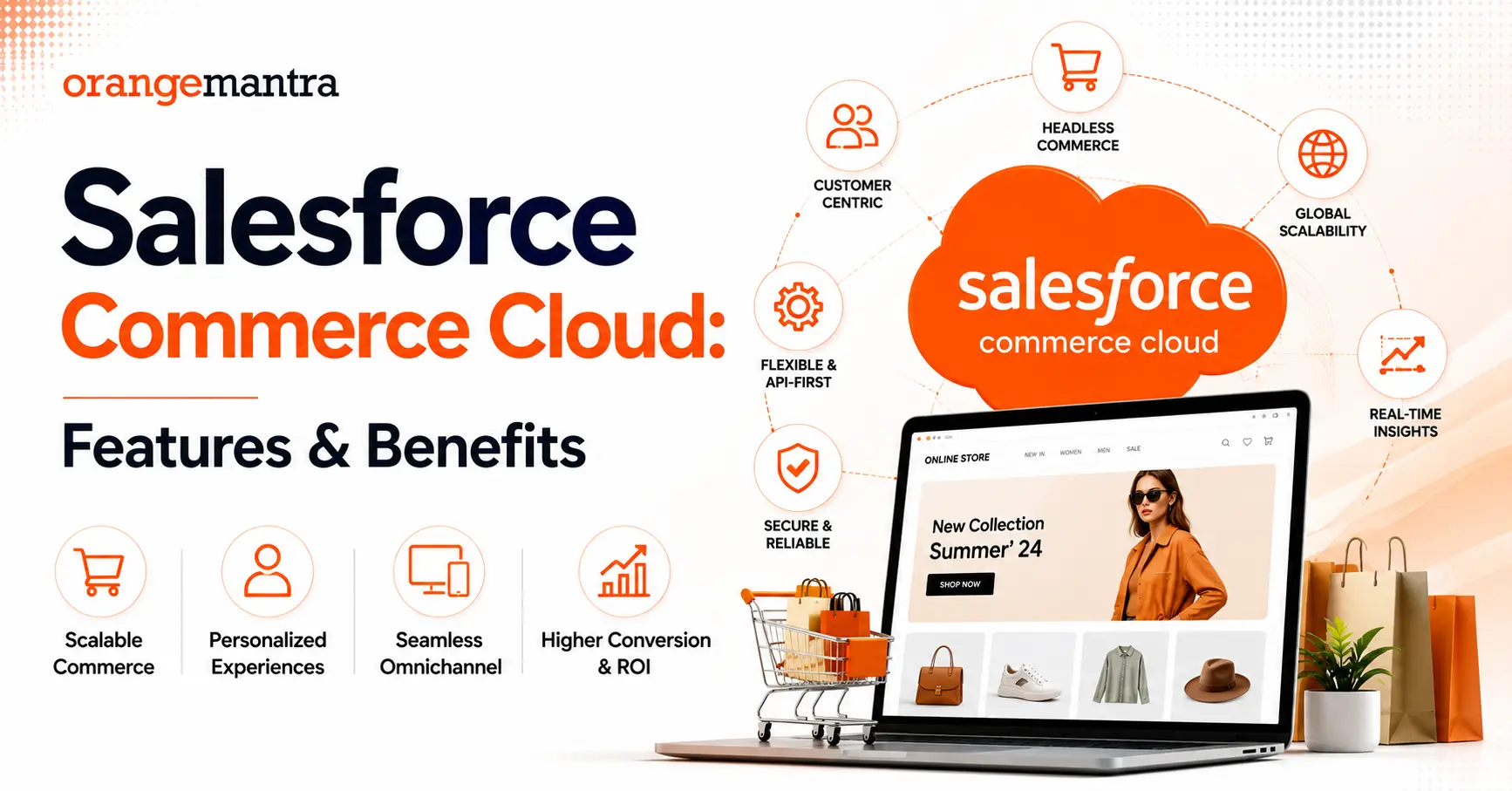
Salesforce Commerce Cloud is a cloud-based ecommerce platform designed to help companies optimize digital shopping experiences. It allows businesses to sell products across websites, mobile apps, social channels, and physical stores for a consistent customer experience.
Brands adopting Commerce Cloud see an average 29% increase in online revenue. Unlike traditional ecommerce platforms, Commerce Cloud Salesforce combines AI, customer data, marketing capabilities, and order management to create unified commerce experiences.
Businesses can:
- Build customized online stores.
- Personalize shopping journeys.
- Manage inventory and orders.
- Automate promotions and campaigns.
- Connect sales, marketing, and customer service.
- Scale globally without infrastructure challenges.
With customer expectations in mind, Salesforce Commerce Cloud enables firms to remain competitive and drive long-term growth.
Why Businesses Are Choosing Salesforce Commerce Cloud?
Salesforce Commerce Cloud brings everything together in one ecosystem.
Deliver Personalized Customer Experiences
Every customer is different. Salesforce Commerce Cloud uses AI-powered insights to recommend products, personalize promotions, and tailor to individual preferences. This improves customer engagement and increases conversion rates.
Scale Without Technical Limitations
Businesses often outgrow traditional ecommerce platforms. Salesforce Commerce Cloud is designed to support growing traffic, expanding catalogs, and international operations. That too without requiring constant infrastructure upgrades.
Support Omnichannel Commerce
Customers may discover products on social media, browse on mobile devices, and complete purchases. Commerce Cloud helps businesses provide a seamless experience across every channel.
Accelerate Time-to-Market
Brands can launch stores, campaigns, and new products faster using built-in tools, templates, and integrations. If you’re looking to launch products efficiently and meet deadlines, Adobe Commerce vs. Salesforce Commerce Cloud are your top choices.
Understanding the Core Components of Salesforce Commerce Cloud
Here are the crucial components of Salesforce Commerce Cloud for specialized solutions.
B2C Commerce for Customer-Centric Shopping Experiences
Modern shoppers expect brands to understand their preferences and provide smooth experiences across devices. B2C Commerce helps businesses create highly engaging storefronts that deliver personalized experiences for the customer journey.
Businesses can manage product catalogs, run promotions, AI recommendations, and support multiple languages from a single platform. It also simplifies order management and provides a consistent experience across channels.
It supports:
- Product catalogs.
- Promotions and discounts.
- AI-driven recommendations.
- Mobile commerce.
- Multi-language stores.
- Order management.
B2B Commerce Cloud Salesforce for Complex Business Transactions
Business purchasing processes are often more complicated than consumer shopping. Buyers may need negotiated pricing, bulk orders, custom catalogs, and approval workflows before completing transactions. Traditional ecommerce platforms often struggle to support these requirements efficiently.
B2B Commerce Cloud Salesforce is designed for manufacturers, wholesalers, and enterprise organizations. It allows businesses to provide personalized portals where customers can view products and track purchases.
Order Management Capabilities
The customer journey doesn’t end after someone clicks the “Buy Now” button. Efficient order management plays a critical role in delivering positive customer experiences.
Salesforce Commerce Cloud helps businesses manage inventory, order fulfillment, shipping, and exchanges through a centralized system. Real-time visibility into stock levels enables businesses to provide accurate information to users.
This streamlined approach helps firms improve delivery, optimize inventory, and ensure customers receive a seamless post-purchase experience.
AI-Powered Commerce with Einstein
AI is transforming how businesses interact with customers. And Salesforce Einstein brings these capabilities directly into Commerce Cloud. Instead of offering generic experiences, Einstein analyzes user behavior, preferences, and browsing patterns to create personalized shopping journeys.
These intelligent capabilities help businesses present the right products to the right customers at the right time. By understanding user intent, firms can increase conversions and improve engagement for long-term growth.
Key Features That Make Salesforce Commerce Cloud Stand Out
Here are the crucial features of Commerce Cloud in Salesforce.
Unified Commerce Ecosystem
Many businesses struggle with disconnected systems that separate sales, customer service, and commerce operations. These silos often result in inconsistent experiences and fragmented customer data.
Salesforce Commerce Cloud solves this challenge by giving teams access to a complete view of customer interactions.
With centralized data and connected workflows, businesses can improve decision-making and build stronger customer relationships.
Mobile-First Experiences
Today’s consumers frequently browse and purchase products through smartphones and tablets. A poor mobile experience can quickly lead to abandoned carts and lost sales opportunities.
Salesforce Commerce Cloud offers mobile-optimized experiences to easily browse products and interact with brands across devices. Fast-loading pages and intuitive navigation contribute to higher engagement and improved conversion rates.
As mobile commerce continues to grow, businesses that prioritize mobile experiences gain a significant competitive advantage.
Global Expansion Capabilities
Expanding into international markets brings new challenges, language differences, currency conversions, and varying payment preferences.
Salesforce Commerce Cloud helps businesses overcome these complexities by supporting multiple languages, currencies, tax structures, and payment gateways. Brands can deliver localized experiences that feel familiar to customers regardless of their location.
AI-Driven Personalization
Modern consumers expect brands to understand their needs and provide relevant recommendations. Generic shopping experiences often fail to capture customer attention and reduce engagement.
Salesforce Commerce Cloud uses AI-powered insights to personalize content, promotions, and product recommendations. These tailored experiences help businesses increase conversions, improve retention, and strengthen customer loyalty.
Personalization also enables organizations to build stronger emotional connections for creating long-term value.
Flexible Integrations
Businesses rely on multiple software systems to manage operations effectively. Salesforce Commerce Cloud is designed to integrate seamlessly with existing technologies for smooth information flow across departments.
It supports integrations with:
- ERP systems.
- CRM platforms.
- Payment gateways.
- Marketing automation tools.
- Inventory management software.
- Shipping providers.
These integrations eliminate data silos, automate processes, and improve operational efficiency, allowing businesses to focus on growth instead of manual tasks.
Salesforce Commerce Cloud Implementation: Turning Strategy Into Reality
Here are the steps to successful Salesforce implementation services for Commerce Cloud.
Discovery and Business Analysis
Every business has unique goals, customer journeys, and operational challenges. Before implementation begins, organizations must understand their requirements and define clear objectives.
This phase involves analyzing existing systems, user expectations, business processes, and future growth plans. With opportunities, businesses can create a roadmap that ensures a smooth and successful implementation.
A well-defined strategy reduces risks and lays the foundation for long-term success.
Store Design and User Experience Development
An attractive and user-friendly storefront directly influences customer engagement and conversions. Consumers expect simple navigation, fast performance, and intuitive shopping experiences.
Hire Salesforce developers to create customized storefronts that align with brand identity, with layouts, search functionality, and checkout processes. Responsive designs ensure consistent experiences across desktops, tablets, and smartphones.
Integration with Existing Systems
Modern commerce relies on multiple business applications working together efficiently. Successful implementations require seamless integration with existing technologies, including:
- CRM platforms.
- ERP solutions.
- Inventory systems.
- Payment gateways.
- Marketing tools.
Connected systems enable teams to collaborate while delivering consistent customer experiences.
Data Migration and Product Catalog Setup
Moving from legacy systems to Salesforce Commerce Cloud involves transferring customer data, pricing structures, and order histories. Poor migration practices can lead to data loss and operational disruptions.
A structured migration strategy ensures that valuable information remains secure throughout the transition process. Product catalogs are organized efficiently to provide smooth navigation and improved shopping experiences.
Testing and Optimization
Before launching a new commerce platform, businesses must verify that everything functions correctly. Extensive testing helps identify issues related to performance, security, user experience, and integrations.
After launch, continuous optimization allows organizations to improve website speed, enhance customer journeys, and adapt to changing market demands. Regular updates and performance monitoring ensure the platform continues delivering exceptional results over time.
Industries Benefiting from Salesforce Commerce Cloud
Different industries have unique customer expectations and operational requirements. Salesforce Commerce Cloud offers flexible capabilities that support diverse business models.
Retail and Fashion
Retail brands use Salesforce Commerce Cloud to create engaging shopping experiences, manage inventory, and deliver personalized recommendations. This helps increase customer loyalty and boost online conversions.
Manufacturing and Distribution
Manufacturers and distributors rely on Salesforce B2B Commerce Cloud to simplify procurement processes. It helps to automate bulk orders and provide self-service capabilities for business buyers. This improves operational efficiency and strengthens customer relationships.
Healthcare and Pharmaceuticals
Healthcare companies use digital commerce solutions to manage products and maintain regulatory compliance. This delivers secure and reliable customer experiences.
Consumer Goods
While Salesforce Commerce Cloud manages shopping experiences, Salesforce Marketing Cloud helps businesses engage customers through personalized communication. This helps increase engagement and provide personalized experiences across channels.
Automotive
Automotive businesses use Salesforce Commerce Cloud to deliver customized buying experiences. It enables self-service capabilities and improves customer interactions throughout the purchasing journey.
Why Businesses Need a Salesforce Development Company?
Implementing Salesforce Commerce Cloud requires specialized expertise and a clear understanding of strategies. Working with an experienced Salesforce development company helps businesses accelerate implementation while reducing risks.
Accelerate Deployment
Experienced professionals understand platform complexities and best practices. This enables businesses to launch faster and avoid common implementation challenges.
Build Customized Experiences
Every organization has different goals and requirements. A Salesforce development company creates tailored solutions that align with unique business needs and customer expectations.
Enable Seamless Integrations
Expert developers ensure smooth integration with ERP, CRM, payment gateways, and third-party applications. This helps create a connected business ecosystem.
Provide Ongoing Support
Commerce platforms require continuous improvements to remain competitive. Ongoing support helps businesses optimize performance, implement updates, and adapt to changing customer expectations.
Maximize ROI
Experienced consultants ensure businesses leverage Salesforce Commerce Cloud capabilities effectively. It helps them achieve measurable growth, improve efficiency, and maximize returns on investment.
Future of Commerce Cloud in Salesforce
The future of digital commerce is becoming increasingly intelligent, automated, and customer-centric. Emerging technologies are reshaping how brands engage with customers and deliver personalized experiences.
Future innovations in Commerce Cloud in Salesforce are expected to include:
- Advanced AI shopping assistants.
- Hyper-personalized customer journeys.
- Voice commerce capabilities.
- Predictive analytics.
- Agentic AI integrations.
- Headless commerce architectures.
- Real-time customer intelligence.
Conclusion:
Customer expectations are changing rapidly, and businesses need more than a traditional ecommerce website to stay competitive. They need intelligent, scalable, and connected commerce experiences that support growth across channels. Salesforce Commerce Cloud provides the foundation to achieve these goals. From personalized customer journeys to seamless integrations, the platform empowers organizations to deliver exceptional shopping experiences. By combining Salesforce Commerce Cloud with Salesforce Marketing Cloud, businesses can create highly personalized customer experiences that strengthen loyalty.
FAQs
-
How doesSalesforceCommerce Cloud help businesses improve online sales?
Salesforce Commerce Cloud helps businesses create personalized shopping experiences, automate promotions, manage inventory, and deliver seamless experiences across websites, mobile apps, and marketplaces. These capabilities improve customer engagement, increase conversions, and support long-term revenue growth.
-
What is included in aSalesforceCommerce Cloud implementation project?
A Salesforce Commerce Cloud implementation typically includes business analysis, storefront design, system integrations, product catalog setup, data migration, testing, and post-launch optimization. A Salesforce development company can customize the platform to align with specific business requirements and growth goals.
-
When should a business chooseSalesforceB2B Commerce Cloud?
Businesses with complex buying processes, bulk orders, account-specific pricing, and approval workflows should consider Salesforce B2B Commerce Cloud. It is widely used by manufacturers, distributors, wholesalers, and enterprise organizations that want to simplify procurement and improve buyer experiences.
-
Can SalesforceCommerce Cloud integrate with Salesforce Marketing Cloud and other business systems?
Yes. Salesforce Commerce Cloud can integrate with Salesforce Marketing Cloud, CRM platforms, ERP systems, payment gateways, inventory software, and third-party applications. These integrations help businesses create connected customer experiences and automate operations across departments.
-
Why do companies partner with aSalesforcedevelopment company for Commerce Cloud projects?
Companies partner with a Salesforce development company to accelerate implementation, customize storefront experiences, integrate existing systems, and ensure long-term platform optimization. Experienced Salesforce experts help businesses maximize ROI while delivering scalable and customer-centric commerce solutions.