

Choosing the right testing model shapes your product quality, speed, and cost. This guide breaks down the most used software testing methodologies, how they work, and when you should apply each one to your projects.
Here's What You’ll Learn
-
 The core differences between Waterfall, V-Model, Agile, Spiral, and DevOps testing approaches
-
When to use each QA model based on project size, risk level, and release timeline
-
How testing methodologies impact defect rate, delivery speed, and overall product stability
-
Practical tips to align your QA strategy with business goals and development workflows

Within the competitive software world, there is no space for mistakes. Software testing methodologies play a vital role in the software development life cycle, giving direction way tests should be performed. So, what are these software testing methodologies, and what role do they play in your applications?
This blog post will guide you on what a testing methodology is and how it’s different from the software testing type. But most importantly, the blog will focus on software testing methodologies.
Table of Contents
Introduction to Software Testing Methodologies
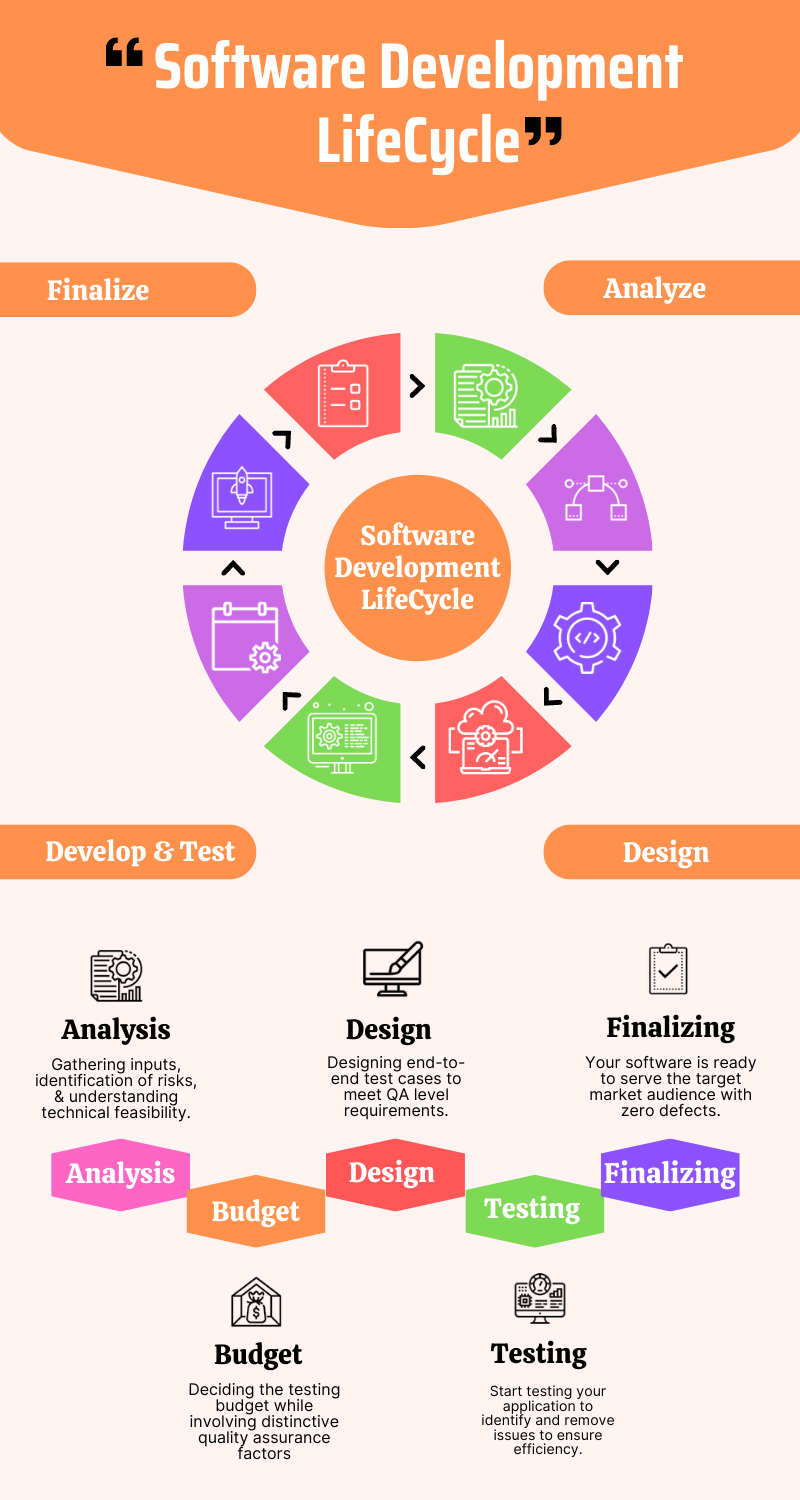
The methodology is a testing process to simultaneously develop and test a software application per the client’s requirements. The testing method defines the project management, organizational structure, and software testing techniques. It builds a plan to conduct the tests, defines the team’s responsibilities, and opens the line of communication. Each methodology has a specific test objective that depends on the application, client expectations, and delivery time.
How Software Testing Methodologies Have Evolved
Software testing has changed fast. It enhanced with time through shorter release cycles, cloud-native systems, and higher user expectations and so testing is no longer a final checkpoint. It is built into every stage of development.
Modern testing focuses on automation, speed, and continuous feedback. QA teams now collaborate closely with developers and operations to catch issues early, reduce risk, and validate real-world performance before users feel the impact.
As a result, new testing approaches have emerged to complement traditional models like Waterfall, Agile, and V-Model, making quality a continuous, not reactive, process.
Popular Software Testing Methodologies
There are multiple models for testing, the list below mentions some of the popular and most used ones.
-
Waterfall Model
Waterfall methodology focuses on the development process that follows a vertical path. It is known for its sequential process, where the next phase only begins once the previous phase gets completed. There are different phases within the waterfall model, including Requirements, Design, Implementation, Verification, and Maintenance.
Testing Approach
The first phase is the requirements phase, where project requirements are fully defined before testing starts. During this phase, testers analyze the scope of the test strategy and build a detailed test plan. The testing team moves to the next phase only when the previous phase completes.
Advantages
- This software development model is very highly simple to implement and manage.
- The success rate is high, where requirements are clearly defined and stated beforehand.
-
Agile Model
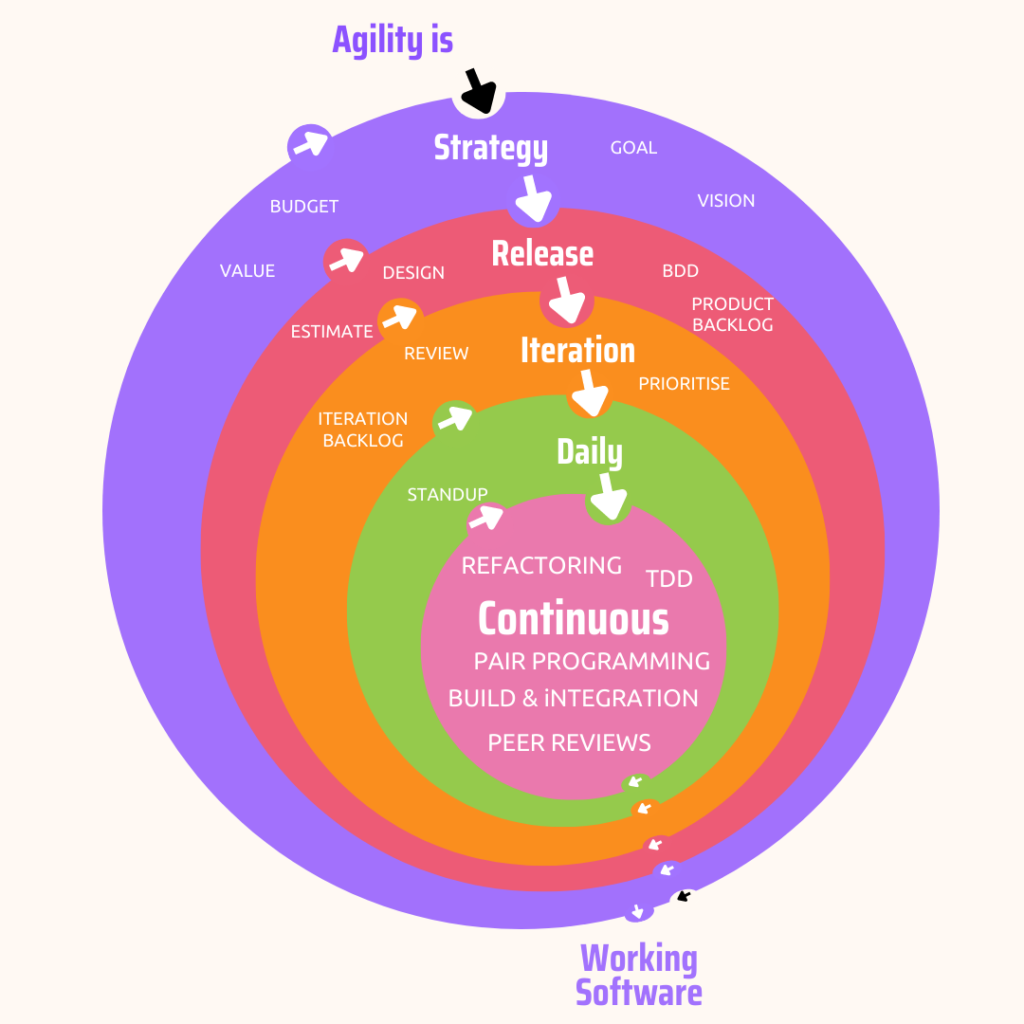
The agile testing methodology is an integral part of software testing services focused on the idea of iterative development. In the Agile method, the development work is done in continuous incremental cycles, called sprints. Due to sophisticated applications and changing market demands, the agile methodology builds communication channels to understand stakeholder requirements. The communication helps the team focus on responding to the changes rather than relying on an extensive planning process.
Testing Approach
Incremental testing is implemented within the agile development method. Thus, every release is tested thoroughly. It ensures that any bugs within the system are fixed before the next big release.
Advantages
- It is possible to make changes in the project at any time to meet the requirements.
- This testing minimizes risks and improves software efficiency.
-
Iterative Model
The methodology works by breaking down the big project into small components. Every component passes through different testing cycles. It is a data-driven strategy, and each iteration works on the outcome of the previous test cycle. The repeated tests release the burden of organizational management and streamline the software requirements. It results in a quality product.
Testing Approach
Once an iteration is complete the whole system is subjected to testing. Feedback from testing is instantly available and included in the next cycle. The testing time needed in successive iterations is lowered based on the insights from past iterations.
Advantages
- Test feedback is immediately available at the end of each cycle.
- The methodology is flexible, so a testing team can quickly make edits to the testing process.
-
The V Model
The V methodology works as an extension of the waterfall model, used for small-scale projects with defined software requirements. It implements a ‘V-shaped’ model categorized into coding, verification, and validation. Coding is like the foundation of the model, and each development phase goes simultaneously with testing, resulting in the early detection of bugs in each step.
Testing Approach
The ‘V-model’ is quite different from the waterfall model. Testers in this model perform tests at each development step. The verification process ensures that the product is developed properly while the validation process ensures that it’s the correct application as per the requirements.
Advantages
- Testing activities like planning and test designing happen well before coding.
- Proactive defect tracking – that is defects are found at an early stage.
- Works well for small projects where requirements are easily understood.
-
Extreme Programming
Extreme programming is based on an agile methodology which implements short development cycles. A project is completed by dividing it into simple engineering tasks. Here developers code a simple piece of software and get feedback from customers. Reviews from the customer are included and the developers move ahead with the next task. Extreme Programming is popular for projects where customer requirements are constantly changing.
Testing Approach
Extreme programming follows a Test-driven development process. Here, quality analysts add a test case to the test suite and verify the new functionality. Next, code is written to implement the feature/functionality. Again, the test suite goes through execution. This time, the new test must pass as functionally has been coded.
Advantages
- Customers having a vague software design in mind could use extreme programming
- Continuous testing and continuous integration of small releases ensure software code is delivered is of high quality
DevOps Testing and Continuous Testing Methodology
DevOps testing integrates quality checks directly into the CI/CD pipeline, ensuring that testing happens continuously alongside development and deployment. Instead of treating testing as a separate phase, this approach automates tests at every stage.
Continuous testing helps teams detect defects early, shorten feedback loops, and maintain application stability even with frequent updates. It enables faster releases without compromising quality, making it ideal for modern, fast-paced development environments.
Shift-Left and Shift-Right Testing Approach
Shift-Left testing moves testing activities earlier in the development lifecycle, starting from requirements and design. By identifying issues at the initial stages, teams can reduce rework, lower costs, and improve overall software quality.
Shift-Right testing extends testing into the production environment. It focuses on monitoring real user behavior, application performance, and system reliability after release. Together, Shift-Left and Shift-Right testing ensure quality is maintained throughout the entire software lifecycle, not just before launch.
AI-Powered and Intelligent Testing Methodologies
Artificial Intelligence has significantly influenced modern software testing methodologies. AI-driven testing tools help automate repetitive tasks and improve test accuracy by learning from past executions.
Key applications of AI in testing include:
- Automated test case generation
- Self-healing test scripts that adapt to UI changes
- Predictive analysis to identify high-risk areas
- Visual validation and anomaly detection
AI-powered testing enhances efficiency but does not replace human testers. Instead, it allows QA teams to focus on exploratory testing, usability, and complex business scenarios.
Security-First and Compliance-Driven Testing Methodology
Security testing has evolved from a reactive process to a proactive methodology. Modern software testing now integrates security checks throughout development rather than performing them only before release.
Security-first testing includes:
- Automated vulnerability scanning
- Secure code reviews
- Compliance validation for data protection standards
- Continuous security testing in CI/CD pipelines
This methodology helps organizations reduce security risks while meeting regulatory and compliance requirements.
Which Software Methodology to Choose?
There are countless methodologies available for automation testing services and their corresponding testing. Each testing methodology is developed for a specific goal and has its relative pros and cons.
The selection of a specific methodology depends on multiple factors like the nature of a project, client requirements, and project schedule. From a testing objective, some methodologies push testing in the initial stages of the development life cycle, while others wait until a working model is ready.
Wrapping Up
Testing has always been a crucial phase of the software development life cycle. It boosts application performance, improves security, and offers quality assurance. But it is not as simple as using a testing tool and running the application to identify errors.
As a professional software testing company, we understand that testing runs parallel with planning, design, and code implementation—it’s never an isolated task. Each software testing methodology we employ provides effective solutions to ensure that every software project aligns with business goals while delivering a personalized and seamless user experience
FAQs
- What are software test methodologies?
Software testing methodologies are the various strategies or approaches used to test an application to ensure it behaves and looks as expected. These encompass everything from front to back-end testing, including unit and system testing.
- What are different QA methodologies?
Test Methodologies include functional and non-functional testing to validate the AUT. Examples of Testing Methodologies are Unit Testing, Integration Testing, System Testing, Performance Testing, etc. Each testing methodology has a defined test objective, test strategy, and deliverables.
- What is the difference between testing techniques and testing tools?
Techniques are basically experiences and intuition that you use to test applications. While tools are a mirror image of those experiences which allows you to manage your testing data or scripts when it’s automation. Testing tools are software programs clubbed together per testing activities.
4. How are modern software testing methodologies different from traditional ones?
Modern testing methodologies focus on automation, continuous testing, and early defect prevention, whereas traditional methods relied on late-stage validation.
5. Is manual testing still relevant in modern software development?
Yes. Manual testing remains critical for exploratory testing, usability validation, and complex business workflows that cannot be fully automated.
6. Which testing methodology works best for cloud-based applications?
Cloud-based applications benefit most from continuous testing, API-first testing, and microservices-focused testing methodologies.