Outsourcing eCommerce development has become a strategic advantage for US retailers. From lowering costs to accessing global talent and scaling faster, this guide explains how partnering with expert teams accelerates digital growth and improves operational efficiency.
Here’s what you will learn:
-
 What eCommerce outsourcing is and how it works
-
Outsourcing vs offshoring vs nearshoring vs onshoring
-
Benefits for US retailers: cost savings, scalability & faster launches
-
How outsourcing enhances security, compliance & time-to-market

The eCommerce sector in the USA is evolving quickly than ever. As the online retailers are seeing new user expectations, AI-powered personalization, multichannel experiences, and secure payments. And they negotiated this landscape because of some difficulties. Such as assembling a cost-effective staff development program without hindering business growth. This is where outsourcing eCommerce development becomes a critical decision for a retail company.
Outsourcing is no longer simply a cost-cutting strategy. It has become a method for US-based firms to gain access to global engineering talent. Also, it shortens time-to-market, unlocks innovation, and decreases operational risk. Let’s see how outsourcing ecommerce development services can help your business grow.
A look around the growing outsource ecommerce development market.
- Outsourcing is a global industry, with about 80% of businesses using it for cost savings, efficiency, and access to talent.
- The IT and business process outsourcing markets are major segments, with the latter projected to reach $525 billion by 2030.
- The IT outsourcing market is expected to reach $812.71 billion by 2029, growing at a CAGR of 8.28% from 2025 to 2029.
- 81% of executives turn to third-party vendors for cybersecurity capabilities.
- 51% of companies report dissatisfaction with outsourcing partners, citing issues like poor deliverables.
Table of Contents
What is eCommerce Outsourcing?
eCommerce outsourcing includes contracting with an external staff. Also, it helps the business manage any aspect of its digital retail operations. It elevates user experience, web development, system integrations, quality assurance, and project management. The internal staff that may lack specific competencies work with skilled eCommerce experts.
Some brands outsource the ecommerce development department for some services. The true advantage is flexibility. The companies may scale for seasonal demand, new launches, or company goals. So, outsourcing becomes a valuable agility tool for developing U.S. merchants attempting to keep up with competition.
Types of eCommerce development outsourcing models
Here are the common types of outsourced ecommerce web development services.
Full Outsourcing
In this paradigm, a development partner is responsible for everything. Right from ideation and design to development, testing, and deployment. It’s great for companies with small SMEs starting their first online store. While full outsourcing decreases day-to-day administration, it necessitates getting the best partner. Selecting a reliable partner and keeping open communication assures clarity and alignment.
Co-Sourcing
This outsourced ecommerce type involves both internal and external teams. Instead of assigning duties precisely, both teams share responsibilities for every phase. Co-sourcing promotes information transfer, boosts innovation, and allows for control while leveraging external expertise. However, it necessitates effective communication channels, daily alignment, and job ownership.
Selective Outsourcing
Some companies have an internal IT team but lack specialized expertise. Such as AI-powered personalization, Magento backend engineering, and cloud architecture. Instead of hiring new people, they outsource just these components. It allows businesses complete control over their main operations while providing access to specialized experts.
Outsourcing vs. Offshoring: Which hiring model suits your B2B business model?
Let’s look at the common differentiators between outsourcing and offshoring services.
| Hiring Model | Location | Cost Level | Communication Ease | Best For | Key Advantage |
|---|---|---|---|---|---|
| Outsourcing | Anywhere (global talent) | Varies | Depends on the partner | Businesses wanting flexibility | Choose expertise without managing internal teams |
| Offshoring | India, Ukraine, the Philippines | Lowest | Moderate (time zone difference) | Cost-sensitive projects, large eCommerce builds | Access to skilled talent at highly affordable rates |
| Onshoring | USA-based developers and agencies | Highest | Excellent | Regulated industries, complex integrations | Cultural alignment and legal compliance |
| Nearshoring | Canada, Mexico, Latin America | Mid-range | High (shared time zone) | Teams needing frequent collaboration | Real-time sync without the cost of onshoring |
Budget vs. Expertise Balance
- Offshoring offers the lowest development cost, ideal for startups and scaling eCommerce brands.
- Onshoring delivers top cultural alignment and compliance, but at a premium rate.
Communication & Time Zone Fit
- Nearshore teams allow real-time collaboration with minimal delays.
- Offshore teams may work while you sleep, great for quicker turnaround, but harder for daily sync.
Project Complexity & Security Needs
- High-security projects often benefit from onshore/nearshore due to regulations.
- Standard eCommerce builds, maintenance, and extension development shift to offshore teams for efficiency.
Talent Availability & Scalability
- Offshore locations offer large, ready-to-deploy developer pools.
- Outsourcing may take longer due to limited availability in niche skills.
Cultural & Operational Alignment
- Onshore teams deliver a seamless cultural match and business culture familiarity.
- Offshore teams provide value, but require structured communication processes.
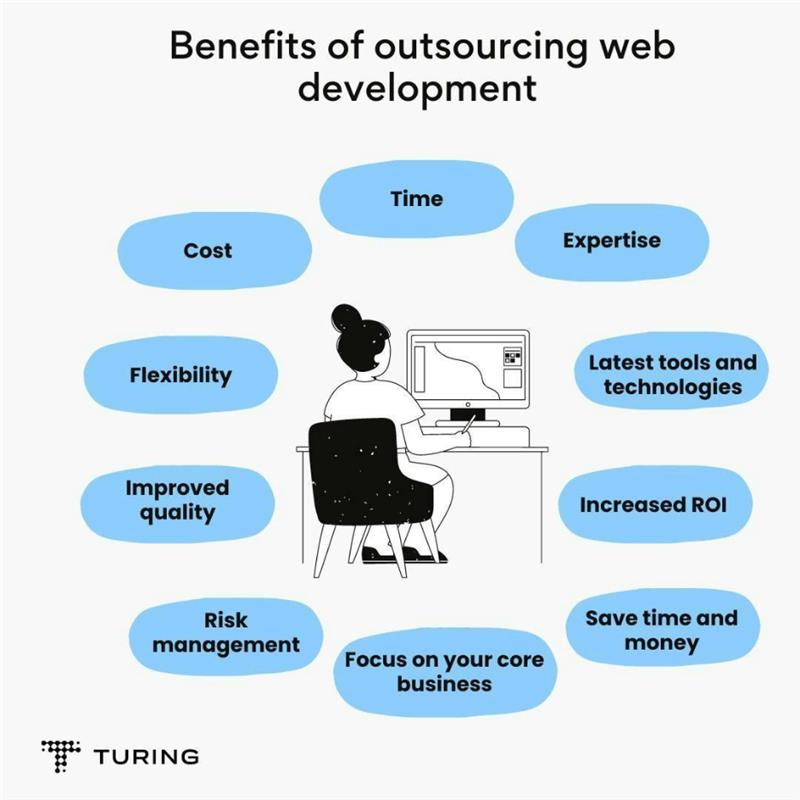
Benefits of Outsourcing eCommerce Development
Here is why you should outsource an ecommerce web development company for your business growth.
Cost savings with quality
Hiring full-time developers in the USA is costly. That too includes salary, employee benefits, hiring costs, training, and long-term retention issues. Outsourcing eliminates these overheads and helps you offer consistent pricing and easy scaling. Partnering with overseas teams results in even greater savings due to cheaper labor expenses.
Access to specialized skills
eCommerce requires a wide range of technologies. Such as front-end frameworks, back-end engineering, cloud hosting, analytics, and UX. Building an in-house team for almost every in-demand skill may lead to overstaffing. Outsource ecommerce development enables merchants to access specialists in each technology stack. Internal staff can then concentrate on core business objectives. Contrarily, outsourced professionals address more sophisticated technical requirements.
Accelerated launch times
Development delays cost money, consumers, and momentum. Outsourcing allows merchants to move quickly because the partner has many advantages. Such as pre-structured teams and sophisticated delivery frameworks. Companies can start development rather than waiting months to acquire in-house staff. In many offshore partnerships, both teams operate in overlapping time cycles. And it means that development occurs when one team works.
Scalability and long-term flexibility
Retailers frequently require urgent development support when their businesses expand. Such as during holiday seasons, new product launches, or expansion into new areas. Outsourcing allows you to gain immediate access to extra engineers without a lengthy hiring process. Whereas, when the firm slows, outsourcing partners can scale services rapidly. This adaptability offers outsourcing a risk-free, future-proof approach for US retailers.
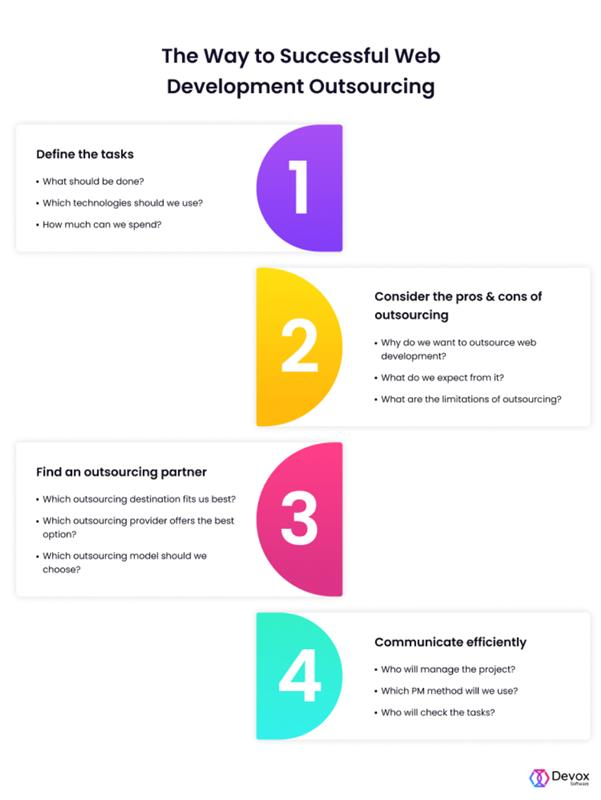
How to Outsource eCommerce Development Services in Easy Steps?
Here are the easy steps to follow for hiring ecommerce experts.
Define project goals
Begin by determining what you hope to achieve with your online store. Determine the features, technological preferences, integrations, user experience, and long-term scalability. Determine the timetable, budget, and probable risks. When you explain these explicitly, it is easier to determine if a provider can meet your needs.
Shortlist development partners
Look for organizations with proven eCommerce portfolios and case studies of your sector. Evaluate their technical knowledge, certifications, methods, communication, and adaptability. Many US companies that outsource ecommerce services release a formal RFP to evaluate vendors. Interviews, technical conversations, and process evaluations can help you identify the greatest fit.
Set up clear governance
Before negotiating a contract, establish a process between your in-house and outsourced personnel. Set up communication protocols, reporting structures, review cycles, and duties. Decide who will oversee project oversight and how frequently progress updates will be provided. And the outsourced team’s decision-making authority.
Discuss the monetary deal
You must discuss the total prices, salary, and other expenses. Because it remains the crucial topic to discuss before starting. So that there are no hidden expenses after the project is initiated. Get the best outsourced development services for your software project. And get the money issues discussed before any delays.
Conclusion:
The decision to outsource eCommerce development can alter the course of a retail organization. Outsourcing provides US companies with global talent access, faster time-to-market, lower costs, and innovation. When collaborating with an offshore team to create stronger digital commerce experiences for conversions. Outsourcing, with the appropriate partner, may become a catalyst for digital growth rather than merely meeting your eCommerce development demands.
FAQs
Q1. How does outsourcing eCommerce development help US businesses reduce overall costs?
Outsourcing allows US brands to access highly skilled developers at lower global rates while maintaining quality through strict SLAs, modern development practices, and dedicated project oversight.
Q2. Can outsource eCommerce teams handle complexities for US-based businesses?
Yes. Top outsourcing partners specialize in enterprise integrations such as SAP, Salesforce, HubSpot, NetSuite, AI-based search, automated inventory systems, and omnichannel marketplace sync.
Q3. What level of control will my company have over the outsourced development process?
US companies maintain full control through structured workflows, daily stand-ups, milestone reviews, transparent reporting, dedicated account managers, and access to staging environments.
Q4. How does outsourcing improve the scalability and time-to-market of my eCommerce platform?
Outsourced teams can scale up or down instantly based on project needs and peak seasons. With diverse skill sets available on demand, they speed up feature development, reduce bottlenecks, and ensure faster deployment.
Q5. Is outsourcing secure enough for handling compliance requirements in the USA?
Reliable outsourcing partners follow strict security frameworks (PCI DSS, GDPR, SOC2, ISO 27001) and implement encryption, secure APIs, multi-factor authentication, and safe CI/CD workflows.
About the Author


Related Articles