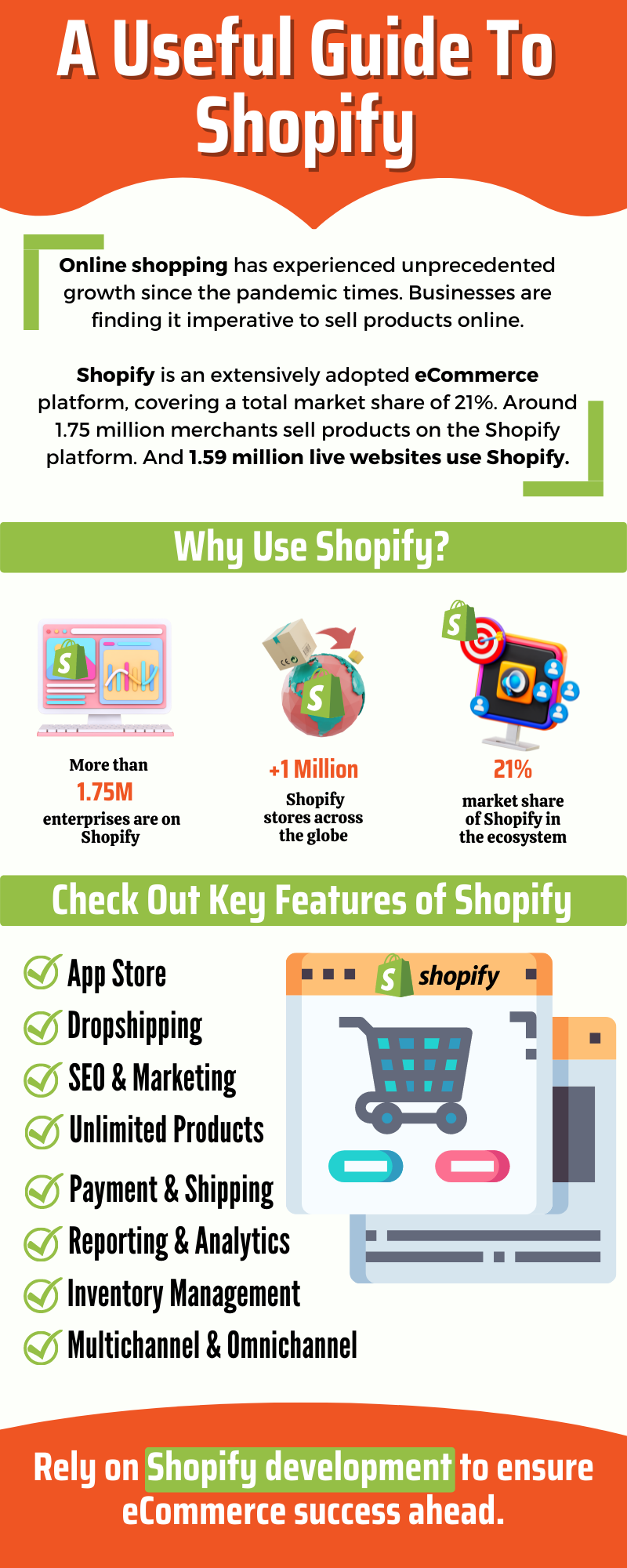
More than 675 million shoppers worldwide have purchased from Shopify stores, generating over $3 trillion in total sales. Today, more than 50% of online stores in the United States are built using Shopify.
By leveraging the power of the Shopify ecosystem, businesses can dominate their markets and outperform competing eCommerce stores. To ensure the platform continues to evolve, Shopify engineers and its global user community constantly innovate and introduce new features.
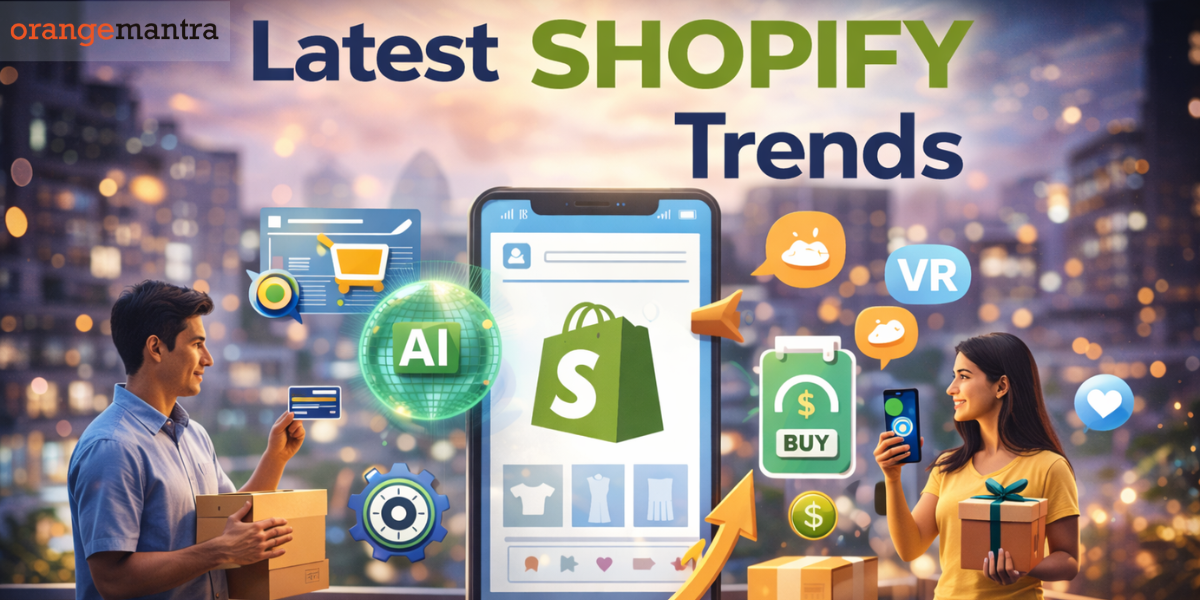
In this guide, we will discuss the latest Shopify trends that every Shopify store owner should know. Shopify is a powerful tool for increasing your online presence and driving sales, which is easy to do if you are up to date with the latest Shopify trends.
Table of Contents
Latest Shopify trends to follow
Let’s look at some latest Shopify trends to incorporate into your eCommerce store to boost brand value.
1. Artificial Intelligence(AI)
What is it:
AI in eCommerce is transforming how you and your customers interact with your store. Today, AI helps improve product suggestions, personalization, customer and user experience.
If your Shopify Store is not leveraging the modern Shopify AI tools, then your business will suffer, especially for small Shopify Stores.
How Modern Shopify Tools Helps:
Setting Up Store & Building Solutions:
One of the latest Shopify trends in 2026 is to set up Shopify store with AI in seconds, Using Shopify’s Magic Tool, you can create a custom theme that aligns with your brand, generate lifestyle shots, contextual images, or ambience-based visuals, create product listings, custom theme blocks like 360° product view, and more without ever leaving your store.
One of the latest Shopify trends in 2026 is the ability to set up a Shopify store with AI in just seconds. Using Shopify’s Magic tool, merchants can create custom themes that align with their brand, generate lifestyle and contextual images, and design ambience-based visuals, all without leaving the Shopify dashboard.
Shopify Magic also helps create product listings and custom theme blocks, such as 360° product views, making store setup faster, smarter, and more accessible than ever.
Improved Customer Experience
Customers no longer use just Google to find your product: we are at the dawn of the Agentic Commerce age. Now, AI agents should be able to understand your product store, product, and policies just like Google.
Read More: What is Agentic Commerce?
Customers use Agents to research and buy products. That’s why the latest Shopify trend to use and leverage apps like Shopify’s knowledge base to represent your brand accurately to AI.
You can track how often your store or product information is requested by AI and what are they are searching. Based on the insights, you can provide the answers that searchers are looking for to improve your e-commerce store conversations.
Model Context Protocol (MCP) Integration:
While using Shopify Store Setup Services, it’s important to connect your Shopify Store to Model Context Protocol Servers. Once connected, your store would be able to share your store information, such as product, cart, and customer information with AI systems.
Mobile First eCommerce Experience
What is It:
According to Statista, more than 60% of internet traffic is now represented by mobile users. The rapid expansion of mobile commerce is directly related to how users access the internet. Users have abandoned PCs as smartphones have become more accessible, and high-speed internet is no longer a premium infrastructure in many countries. That’s why one of the latest Shopify trends is to optimize your site for mobile first.
How to optimise your store for the mobile-first era:
Mobile-optimized themes:
Use Shopify themes that are built specifically for fast loading, easy navigation, and thumb-friendly design. Buttons, menus, and product pages should feel natural on smaller screens.
AR features for mobile shoppers:
Augmented Reality works best on mobile devices. Adding AR product previews allows customers to view products in their real environment using their phone camera, increasing buying confidence and reducing returns.
One-click checkout:
Mobile users expect speed. Implementing one-click checkout options helps reduce cart abandonment and makes buying effortless, especially for repeat customers.
Chatbots
What is it:
An eCommerce chatbot is an AI-powered Intelligent Virtual Assistant solution that online retailers can use to engage customers at all stages of their journey. A bot can let user stay updated about the online payment offers and benefits. Chatbots on eCommerce websites respond to frequently asked questions, collect customer feedback, and solve complex customer queries.
Hire a Shopify developer who can establish chatbots in your eCommerce store.
These intend to clear the clutter that a buyer may encounter while shopping. Various businesses are developing bots that can do almost anything, from ordering food to booking appointments. Bots help enterprises save money while improving customer service.
Headless Commerce & Custom Storefronts
What is it:
Headless commerce separates the front-end design of your store from the back-end commerce engine. This gives businesses more flexibility to build fast, custom, and unique storefront experiences.
Instead of being limited by traditional templates, brands can design storefronts that truly reflect their identity.
Why it matters:
With headless commerce, Shopify stores can load faster, scale better, and deliver consistent experiences across web, mobile apps, kiosks, and other digital touchpoints.
This trend is especially useful for growing brands that want more control over design, performance, and customer experience.
You Might Be Interested in: Headless E-Commerce benefits for businesses
Social Commerce
What is it:
Social media is no longer just for brand awareness. Customers now discover and purchase products directly from platforms like TikTok and Instagram.
Social commerce allows customers to buy products without leaving the social app.
Why it’s a Latest Shopify trend:
Short videos, influencer content, and live shopping make buying feel natural and instant. Shopify makes it easier to sync product catalogs, manage orders, and track performance across social platforms.
For many brands, social commerce is becoming one of the highest-converting sales channels.
Omnichannel Selling & POS Unification
What is it:
Omnichannel selling connects online stores, physical locations, social platforms, and marketplaces into one unified system.
Customers expect a seamless experience whether they shop online, on mobile, or in-store.
How Shopify supports this trend:
Multi-store support for growing brands:
Shopify allows businesses to run multiple stores under one brand, but each store requires its own Shopify subscription on standard plans.
Basic, Grow, and Advanced plans support multi-store setups by allowing merchants to create separate stores for different regions, brands, or use cases. Each store is managed individually, with its own admin, billing, and configuration.
As businesses scale, Shopify offers more advanced multi-store and enterprise-level capabilities. \
- Local storefronts by market for region-specific pricing, language, and currency
- Up to 200 inventory locations
- Unlimited staff accounts
- Up to 200 POS Pro locations
- Centralized management for complex operations
While Shopify does not merge all stores into a single admin, it is designed to support large, multi-region, and multi-brand businesses with better scalability, automation, and operational control.
This makes Shopify suitable for brands expanding into new markets, managing multiple retail locations, or operating both online and in-store sales at scale.
Local delivery for nearby customers:
Shopify Local delivery app helps businesses serve customers in their surrounding areas more efficiently.
Merchants can define delivery zones using distance radius or postal codes, customize delivery charges, and display clear delivery messages at checkout.
Using the Shopify Local Delivery app, store owners can manage deliveries in one place, create optimized delivery routes, and track orders in real time. Delivery staff can use the mobile app to access directions, send notifications, and update delivery statuses.
This makes omnichannel selling truly complete by connecting online orders with fast, local fulfillment.
Centralized store management:
Shopify allows businesses to manage inventory, orders, customers, and payments from a single dashboard. This removes the need to switch between systems and helps teams work faster and more accurately.
POS unification across channels:
With Shopify POS, online and in-store sales stay fully synced. Stock levels update automatically across all channels, reducing overselling, manual errors, and customer frustration.
App Ecosystem & Automation Tools
What is it:
Shopify’s app ecosystem allows store owners to add new features without custom development. Automation tools help reduce manual work and improve efficiency.
Why it matters:
Apps can automate tasks such as order processing, email marketing, inventory updates, reviews, and customer support.
This allows store owners to focus more on growth, marketing, and customer relationships instead of daily operations.
Sustainability & Ethical Commerce
What is it:
Customers are becoming more conscious about how products are made, packaged, and delivered. Sustainability is no longer optional, it influences buying decisions.
How Shopify supports ethical commerce:
Shopify enables merchants to offer eco-friendly packaging, carbon-neutral shipping options, and transparent product sourcing.
Brands that communicate their values clearly build stronger trust and long-term loyalty with customers.
Security, Fraud Prevention & Compliance
What is it:
As online shopping grows, so do security risks. Protecting customer data and preventing fraud is a top priority for Shopify store owners.
Why this trend is critical:
Customers trust stores that offer secure checkouts and safe payment options. Shopify continues to improve fraud detection, data protection, and compliance tools to keep stores secure.
A secure store protects both your business and your customers.
Shopify Plus & Enterprise Scalability
What is it:
Shopify Plus is designed for high-growth and enterprise-level businesses that need advanced customization, automation, and performance.
Why more brands are upgrading:
As businesses scale, they need better control over checkout, integrations, global selling, and automation. Shopify Plus supports large traffic volumes without compromising speed or reliability.
This makes it a strong choice for brands planning long-term growth.
Voice & Conversational Commerce
What is it:
Voice search and conversational shopping allow customers to search for products, ask questions, and place orders using voice commands or chat interfaces.
Every user benefits from the ability to search for anything using voice commands. Voice search is a significant trend that improves the user experience. Businesses today have recognized the value of incorporating advanced AI technology via voice searches. It enhances the user’s experience by saving them time. As a result, the voice search feature will be one of the most implemented Shopify trends in 2026.
Users can speak and search for whatever they want rather than typing words on the keyboard. Voice search is now being integrated into eCommerce websites by owners. Alexa, for example, can assist you in searching for product prices or even placing an order.
Why it’s emerging:
Voice search is becoming increasingly popular, and customers prefer faster and more natural interactions. Voice and chat-based commerce improves accessibility and convenience, especially for mobile and smart-device users.
As AI assistants evolve, conversational commerce will play a bigger role in how customers shop online.
Conclusion
All the technologies and Shopify trends mentioned above will continue to grow in the coming years and are here to stay. Each provides exceptional benefits while motivating you to implement them at every step. For more consideration, consult the Shopify development company for your projects by getting in touch with experts at OrangeMantra.
FAQ’s
Q1. Is Shopify capable of drop shipping?
When it comes to e-commerce dropshipping, Shopify is the undisputed leader. You can enable the functionality of dropshipping by following simple steps. All you have to do is create an account on Shopify and find a drop-shipping website to add the products that you like to sell. After that set up your store and design to provide a customized outlook.
Q2. Does Shopify provide you with a website?
Shopify is a software service subscription that allows you to create a website and use their shopping cart solution to sell, ship, and manage your products. You can select a particular template to design, add products, and services, and start managing the business online.
Q3. How much does it cost to develop a Shopify Store?
The cost factor depends on your business level requirements in terms of adding specific functionality, design elements, and other such things. The actual cost will be discussed after understanding your need and business objective.